
The Ugliness
vengeance vs justice, and the real reason 'cancel culture' can't help but change you

(In which I use an imperfect reflection on Buffy The Vampire Slayer’s best character, Anya, to talk about houndings, recent developments in ‘cancel culture’ narratives, and Kate Clanchy. Because it’s my Substack and because I can, hahaha. No prior Buffy knowledge necessary - and apologies to subscribers: I know it’s been a while…I won’t bore you with excuses or reasons - but I will be posting more regularly again from now on!)
***
As a teen in the 90s, I was very fond of - and undoubtedly influenced by - the narratives of supernatural American high-school based drama series. Always involving battles of good vs evil, plus sexy women saving the world but looking absolutely immaculate while doing so, ‘What Would Buffy The Vampire Slayer do?’ was a legitimate question in my friendship group.
Equally, though, ‘What Would Anya Do?’ was important to consider. A former vengeance demon turned pal of Buffy, the final episode of the popular series, which ran from 1997 - 2003, sees her preparing to fight what will be her last battle. It’s the biggest fight Buffy and her sidekicks have ever faced. She knows she mightn’t make it.
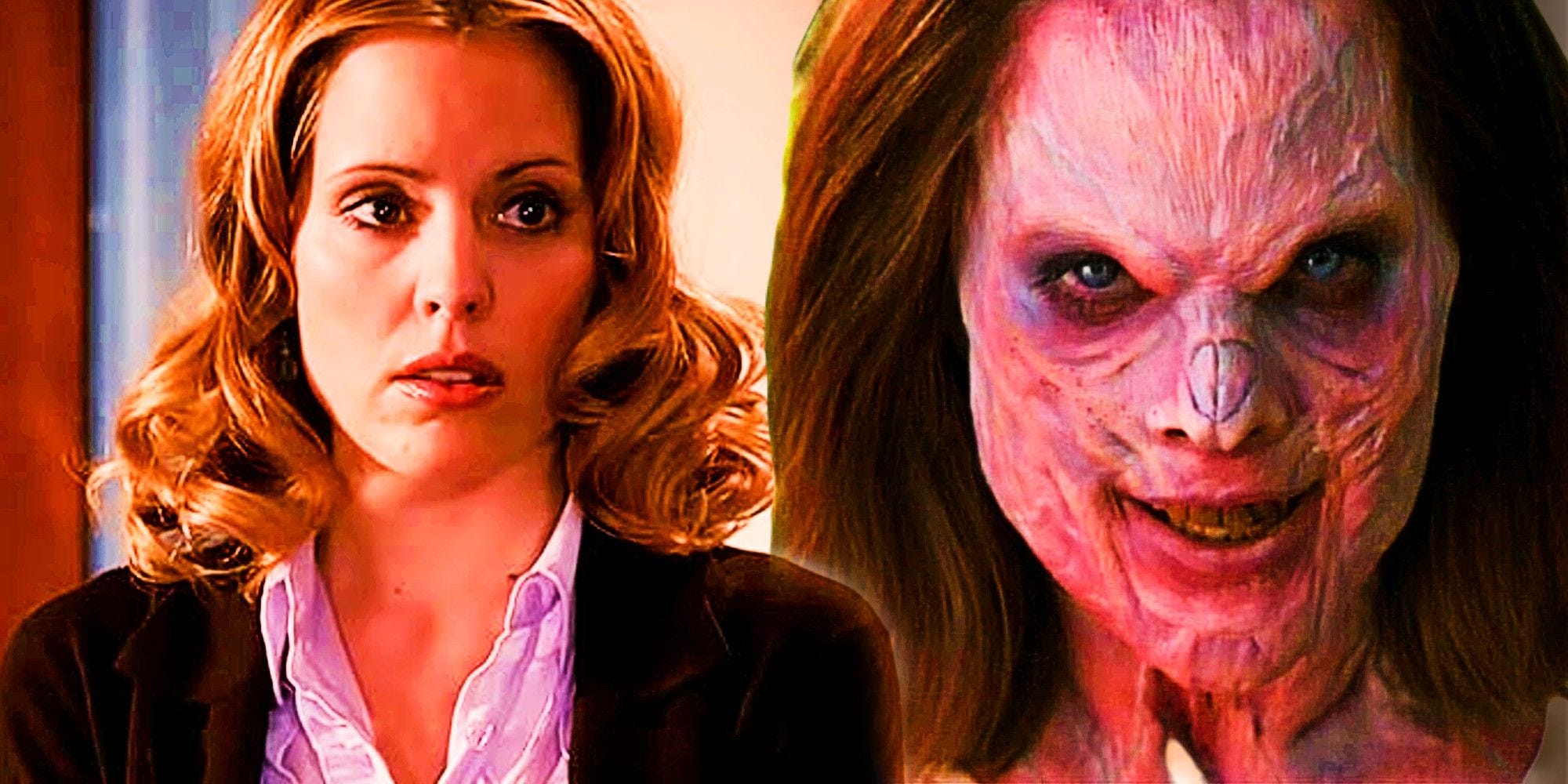
*Spoiler alert* Anya is killed, fighting on the right side of history, against the apocalyptic forces of The First Evil.
A complex character, Anya always battled with doing the right thing, struggling to know exactly how to be human in the first place. She’d spent millenia enacting vengeance against men on behalf of wronged women, before losing her powers in Season 3 and getting stuck in the persona of a high school student.
After being jilted at the altar in Season 6, she returns to vengeance demon-ing for a spell, so devastated by the betrayal of her fiancee it turns her tonto, including slaughtering half a fraternity house with a demonic spider that rips out the hearts of some jocks who’d bullied a young Asian girl.
The girl had cried out “I wish you all knew what it was like to have your hearts ripped out!”
Anya turned up to the university frat house and granted her wish in a way the girl perhaps hadn’t envisioned.
Anya always went too far. Embellished. Convinced herself she was in the right. Men are evil, after all. Out with their hearts of betrayal! This is JUSTICE as well as vengeance!
But, by the final season, this kind of thinking just isn’t working for her anymore. Anya tries to cope with what she has done with denial, sadness, rage, all the rest of it, before Buffy and best pal Willow manage to persuade Anya’s vengeance demon boss to allow her to be fully human again, undo her evil deed, returning the shitey jocks to the land of the living.
Come the finale episode, some time after Anya’s return to being fully human and mortal again, she and the hapless Andrew gather supplies for the final, epic battle. Andrew asks her why she has stayed to fight this time when she hasn’t always stuck around when the end of the world seems nigh. She lets rip about humans:
Anya: Well, there was this other apocalypse this one time. And, well, I took off. But this time, I don’t- I don’t know.
Andrew: Well, what’s different?
Anya: Well, I guess I was kinda new to being around humans before. And now I’ve seen a lot more, gotten to know people, seen what they’re capable of and... I guess I just realized how amazingly screwed up they all are. I mean, really, really screwed up in a monumental fashion.
Andrew: Oh.
Anya: And they have no purpose that unites them, so they just drift around, blundering through life until they die, which they- they know is coming, yet every single one of them is surprised when it happens to them. They’re incapable of thinking about what they want beyond the moment. They kill each other, which is *clearly* insane... And yet, here’s the thing... When it’s something that really matters, they fight. I mean, they’re lame morons for fighting, but they do. They never... They never quit... And so I guess I will keep fighting, too.
This type of thinking is fairly close to how I used to think about what was best about my fellow humans. A clear-eyed knowledge that we’re capable of much evil, idiocy, pointlessness, and so a choice to do good is important. Not doing what is easy but what is right. I’d thought most people, save for yer actual maniacs, psychos, sadists and genocidal tyrants, believed this was what made your average, not-a-superhero human a good person too. When it really matters, we’ll fight.
We are a blundering lot, but we will do the right thing. If something truly demonic is occurring in front of us? We care. We don’t shy away. Hell, we know our history in the West, we know how badly wrong humans can be, how prone to the ‘banality of evil.’ We’re clued up to mass delusions, totalitarian ways of thinking, cultural authoritarianism, yeah?
If, say, a mass global movement started spreading that was physically and psychologically harming children, destroying women’s and gay rights, and women were being threatened with murder and rape over standing against it, we’d all oppose that, right?
We can’t personally always go to battle, but we’ll certainly support the slayers and magic folk trying to rectify things and save the world, as it were. Whittle some stakes at least. We’ll not sit on the sidelines bitching about Buffy’s footwear, even as she shin-kicks and slays the Uber-Vamps and protects us against them, would we?
What Anya’s redemption arc summed up, too, as she joined Buffy’s mission, was the power and importance of human forgiveness. Welcomed back into the fold after doing terrible things, she dies saving the life of another fallen character, the aforementioned Andrew, and becomes part of the good fight.
Death is the final page of all our stories, and hers ends with her going out as one of those silly humans, flawed, but a good person.
Doing the right thing. Doing the wrong thing but being forgiven because you’ve worked to redeem yourself. Working to be the best humans. ‘Fighting the forces of darkness,’ which were so clear-cut once.
Ah, the 90s! Ah, the odd morality of Buffy the Vampire Slayer and how it shaped us millenial kids!
More on dear Anya soon. But all of this is by way of an imperfect and lengthy introduction to something that’s often under-appreciated about the true impact of being hounded and cancelled.
Being so is a severe wake-up call for those of us who were fairly determined to think the best of the world and believed in the people around us to care - not just about our wellbeing - but about truth, child safeguarding, democracy, social cohesion generally. Genderism is a fundamentally destabilising ideology, that upturns every institution it gets a hold in, with demonstrable damage to our very democracy. It’s been astounding to see how few care. And not just don’t care, seem to welcome that, and also welcome the wholescale abuse of women trying to stop it.
And I don’t know how to forgive them.
This would never have happened in any Buffy story arc, where most of the characters are deeply flawed at least once, but get forgiven and ultimately are redeemed. But I am not sure the complacency from genderist handmaidens and laddies is forgiveable. Not that any of them are asking for it, either convinced of the righteousness of the cause, or misguidedly supposing that turning a blind eye to all of this, or going along with it, is being ‘neutral'.
’Neutrality’ isn’t admirable. We’re on a Hellmouth, skippy. At least hand us a crucifix, eh?
For the hounded, meanwhile, there’s routinely a lack of any justice for those designated a wrong un. Demons never slain. The bad guys are the ones who’ve wrongly designated someone else a bad guy, which is why it’s always so arse-about-tit to get through; shame is misplaced on the unfairly accused; righteousness claimed by the demonic multi-headed hounding hydra.
The bad guys thus continue being bad guys repeatedly, rampaging from open letter to open letter, snide cancellation to snide cancellation, never learning any lessons, never reflecting.
What do the hounded do here? Just take it? Never speak of it again? When it’s only happening because you’re trying to highlight - if not an apocalypse - a really, really bad thing that is happening? And the bad guys keep ‘winning’? Both on their campaign to change the world for the worse, and also in their intention to destroy you personally?
There are several reasons this is a shit life experience to go through, including:
1: It is brutally unforgiving - there is literally nothing you can do or say to hounders that will make them stop. They’ve set the spiders of righteousness on your heart, and that’s that. Bitey bitey. Chomp chomp.
2: You’re being treated as if you are SO wrong, SO beyond the pale when you seriously do not believe you’ve done anything that merits the total destruction of both your character and livelihood. And with such glee, too! Your hounders are Anya in Season 3 Vengeance Demon mode: utterly excessive, utterly relentless, utterly incapable of self-reflection. And you’ve not done anything to anyone, so who the fuck actually called for your heart to be ripped out anyway?? Who is this being done on behalf of?? People and slights are invented and amplified to excess. Your heart’s half gone now.
3: There is a severe ugliness to the whole thing, aside from the metaphorical gore. You’re being publicly humiliated, even though you’ve only half a heart left. Everyone can see the spiders attacking you, but actually, they’ve spun a web of other things that are simultaneously raging privately, that you aren’t sure you should speak about publicly… but how the hell are you going to actually make things stop if nobody knows the extent of what’s been happening?? But FUCK SAKE these spiders are bloody massive and you need to deal with them first anyway. Ouchy.
4: Cancel culture IS an example of the worst human instincts: vicious in-group mobbing; ostracisation from the tribe; murder of a kind, really, which is why so many of those who’ve been hounded report it feels like a death of sorts. This is why a massive spider set on you by a vengeance demon trying to rip your heart out feels like a solid visual analogy for how emotionally and psychologically disturbing it can be to go through.
It changes, fundamentally, how you view people around you. After all, not only is the vengeance demon mob ripping your heart out, few are doing anything to stop them. Where the hell is Buffy? Why is Willow just sitting there, whistling?
Why is nobody telling the vengeance demon they don’t need to be acting that way? That they’re being utterly inhumane? Can’t someone appeal to this demon’s boss??? And, again, you’ve not even done anything that justifies any vengeance! What is any of this for? Why are people claiming it’s for reasons of justice????
And sometimes, it starts to make you feel vengeful. And no wonder. Spiders. Death. But you know you can’t get down in the gore with these people. You try not to - every single thing you do or say is twisted to justify what’s happening to you, so you cannot, you mustn’t, give them ANY ammo.
Plus, you’ve never been a vengeful person. This is new. This is… Shit. You are starting to feel vengeful. You’re fucking raging.
You work very hard to curb that feeling. It’s poison and no good for you. You don’t name the people involved. You do, however, try to explain as calmly as possible what this is all doing to you. Perhaps some will care.
Oh. Many don’t actually.
Willow rolls her eyes and says not to make such a fuss, just change your name and leave your profession for goodness sake, stop going on about demonic spiders and their handlers like some wizard-speaking lunatic.
Buffy is off on a date with the vengeance demon. Bollocks. People you thought would assist you abandon you.
You get through it. Mostly. But years then pass. Years of you training yourself to watch in dissassociation at times as the spider keeps nibbling. But then, something strange happens.
Lots of people who ignored it all start to speak out and reflect that it was very ugly what happened to you. Do you want to write about it? Will you give comment? Fancy writing an entire book about houndings generally? What about a BBC podcast series?
Holy shit - someone apologises to you! What a turnaround appears to be happening!
So. Do you spill the whole story? That’s impossible, really. But you can at least make sure your side is told as fully as possible, and in your own words.
Which brings us to Kate Clanchy.
Falsely accused of racism and being a terrible teacher in 2021, her hounding was difficult to witness and difficult - as all are - to sum up neatly. She lost her publisher, her students were traduced despite defending her, her literary hounders have claimed SHE is the one who has caused THEM harm, and all of the rest of the abusive tactics readers of this site will be familiar with.
In truth, she is a mild-mannered talented poetry teacher who wrote an award-winning memoir, made it in a notoriously difficult industry, and she was made to pay for it.
The BBC, in an odd example of decency within the bad news stories this last fortnight, commissioned a 6-part podcast series designed to look at the series of events from all angles.
I wrote about the Anatomy of a Cancellation podcast for The Scotsman, hurriedly listening to the entire season having pitched to write a preview on it, which I thought I’d be able to do quickly - I was in Tenerife with my Ma that week and the sea beckoned.
Of course, the BBC chose to bring forward the entire thing after I got the sign off to write a preview, so instead of a swift background piece, I ended up in a bit of a sweaty, tangled knot, sitting on the sweltering balcony (your heart’s bleeding for me, I know) as I made furious notes on each episode.
There was SO much information, that I don’t mind saying it took me a good while to grapple with it. I’ve been there after all. It’s subject matter I can find tricky at times.
Episode 2 caused me the most fury. I don’t know how I’d cope if my own tormentors were invited to justify - and double down - on their own treatment of me on the national broadcaster, and Monisha Rajesh and Anthony Anaxagorou got very little pushback on their claims.
Both even denied that Kate had experienced ‘cancellation.’ That is an abusive claim - denial of abuse is gaslighting. Ignorant in the extreme, both came across very badly.
Anaxagorou sounded extremely smug; Rajesh was about as believable and authentic as that weird crying Instagram thing she put out ahead of it airing.
This is a woman who has routinely typed out insane screeds of abuse against fellow writers. Her meek, sobbing claims of personal victimhood should seriously have had more pushback from presenter Katie Razzall. As Hadley Freeman said, this is not someone who ‘critiques.’ It’s vile spider-bitey stuff.
I was going to write a Substack on that episode, but Kate Clanchy herself has done such a superb job here that I decided to think about justice vs vengeance instead. It’s something I’ve long struggled with.
Kate has never had the option I had, of anonymising all but the most publicly vocal of my hounders. I could do that because, to be as polite as I can about it, while some of them fancy themselves big cheeses in Scotland, barely any are known outside of it. I myself wasn’t particularly well known outwith my own niche field either until my 2020 essay went fairly viral.
But Kate is very well-known, and very successful, as are some of her hounders - though not as much as she is. As James Marriott suggests, that’s precisely why she was targeted by lesser writers. (For my own part, I do believe professional envy came into my own situation too. Some of my hounders were, of course, simply zealous, genderist bellends.)
But Kate’s hounders have all been proudly open about trying to destroy her, and justify it in a way that my own mostly shy away from, rarely even naming me.
I don’t think about them very often, to be honest. I think I’ve graduated successfully out of that world, which is great. I do wish those idiots would stop trying to drag me back into it, though. I’ve got about as much interest in what idiotic poets, failed novelists, and talented writers who are nevertheless incoherent and maniacally stupid on the gender issue have to say about me as I do in HGV mechanics or sheep husbandry.
Do I seek vengeance? Not really. I won’t stand in the way of others providing critique of my hounders, though. I’d still like justice. But I’m not going to get any. There’s no point trying for any. Like trying for a size 10 figure. Or someone to buy me a castle.
But I would like to live long enough to see an end to houndings being successful, or viewed as justifiable. There’s a suggestion that might be an era that is slowly coming in the literary arts…? Might there be a mass ‘oh would you just STOP!’ to the houndlings?
**Touches everything wooden in sight**
Using Kate Clanchy’s story as a jumping off point, there’s been a lot of comment pieces about cancel culture this past few weeks. In many pieces, the underlying assumption seems to be that cancel culture has ended, it was a lockdown thing, it was years ago, columnists writing about it in the past tense and... that’s great. It’s also difficult.
I’m unaware of anyone ever being fully uncancelled in the field they were cancelled from - and sometimes even thinking about it, the sheer pointlessness of it all, can knock you sideways. Those spiders were fucking huge and, while it turns out you can regrow your heart a bit, it’s pretty damn damaged.
Writers need to spin a good narrative, as Joss Whedon did with Anya’s redemption arc, and so do readers. I’d love to have a neat, ‘uncancelled’ story. I bet Kate would too. She doesn’t. It’s why ‘hounded’ is better than ‘cancel culture.’ Even if you can work through a cancellation and rebuild your life a bit, you can never be ‘un-hounded.’
What I do have, for me, is a ‘wrote way through it and found new way to write’ story, that is a total work-in-progress that might have a shitey plot-twist at any point.
What Kate has is - finally - an apology from her former publisher for being dreadful, the BBC taking mainstream interest in what her story says about the wider problems in publishing with ‘cancel culture’, and a huge amount of support for her going public, AND - while she’s not vengeful either - some of her worst tormentors finally getting a bit of a hard time over their disturbing justifications for what they did.
For those tempted to say I wish these writers hounded in turn, I don’t. Houndings are devastating destruction of your entire life and psychological wellbeing. Your ability to get out of bed. To earn a living. I wouldn’t wish it on anyone.
Writers are allowed to be terrible people and still write and publish books, and all of them should, should they have the talent to do so. They are not beyond critique, though, and they should be, for being utterly disgraceful.
(I’m sorry, but read Kate’s Substack. These people mocked her dead parents. There’s no real coming back from that, morally speaking, if you won’t admit to there being anything wrong with it. You are still free to write nice twee travel memoirs, of course.)
Hounding is an awful set of events, then becomes a weird life, then the hounding part becomes a background burr, often largely becoming irrelevant, doesn’t affect you much anymore.
But I don’t know anyone who has been hounded who feels entirely at ease, not really, not even once ‘back on their feet.’ It’s undoubtedly taken years off my life. I don’t think there’s any way it can’t have. It is the most stressful, anxiety-inducing, appalling thing I’ve ever experienced. It’s a helluva thing to go through. Rebuilding an ability to trust, and to think long term, the hardest part.
No net good came to the world from any of our houndings. Not mine, not Kate Clanchy’s, not Rosie Kay’s, or Milli Hill’s, or Rachel Rooney’s, or ‘Fiona’ (the anon theatre director in Hounded), or Gillian Philip, or Toby Martinez de las Rivas, mentioned in Kate’s excellent Substack, about the first, big literary houndings, which preceded my own by about a year or so, and involved a LOT of the same people.
No good work was made due to our sidelining from the literary arts, or dance, or film festivals, or theatre, or women’s health writing, or anywhere else.
They have been an ugly and unnecessary thing, that became a vital and important thing for all of us to address, because we chose to instead of artistic or literary death. ‘Mercy’s antithesis’ is how Nick Cave described ‘cancel culture’ in the arts. He is correct.
But, I’ve noted the tonal shift on how such things are being written about by external observers. I’m looking forward to joining them in full chin-stroking mode.
It’s just often difficult to past-tense it when you’ve been personally affected, and what resolutions might be on offer don’t include any justice. You can’t really get any when something was utterly unjustifiable in the first place.
At least the unjustifiability is recognised more these days. That’s good. That’s really something.
But I’ve been forever changed by the ugliness. The ugliness of the hounders, the ugliness of the bystanders.
The ugliness of the carping sideliners, too, who, even when they might AGREE with gender critical women, or think Clanchy’s hounding appalling, think it’s somehow helpful to use their social media to bitch about women fighting this. Again - hand us some weaponry, carpy bitchy types. You want this crap to end as much as we do, don’t you? Stop tripping us up on the way to the metaphorical weapons arsenal.
I loathe hounding behaviours. I think, like Anya’s kneejerk decision to return to being a vengeance demon after being horribly slighted, that it’d be a betrayal of myself to ape the actions of my accusers, abusers, and tormentors. So, I try not to.
I don’t want to ‘own’ anyone. I don’t want vengeance. But, I do want a wholesome, fulfilled life, and I want to get through this with my head intact, and go out like one of those daft humans, being a moron but trying to fight the good fight. I think, really, six years is quite enough time for someone to reflect and grow. To do an Anya. Stop being a vengeance demon, just stop with trying to destroy gender critical women, or writers you’ve decided need destroyed because you don’t agree with them, or don’t like them, or envy them if you’d just be honest with yourself. Try to rectify the wrong you’ve done. None of this was justifiable.
So. We’ll see.
I can’t undo the ugliness and it has changed me forever. There’s not a chance it hasn’t changed Kate forever too. She said on the podcast that she can’t imagine ever being happy again. Ooft, I have been there.
I no longer feel that way. I am sure Kate will get there too.
Vengeance might have its place. It’s a universal human emotion. But, I’ll park the vengeful feelings and hope - now that the world’s woken up a bit - that justice might just run its course. More people recognising the ugliness - and who is causing it - is a very good start in that happening.
(The Schism Ring is a reader-supported publication, and my entire income comes from freelance writing. Do consider subscribing, or becoming a paid subscriber below if you are able. You can also buy ‘Hounded’ here, poetry collection ‘This Script’ here, or make a one-off donation here.)
One potential way to help oneself (and others?) through such an experience is maybe to see one's hounders as spiritually sick, which I've no doubt they are (you appropriately use the word 'demonic' in the piece).
Brilliant piece. It's a valid observation that, even when cancel culture seems to have peaked, there's no way back for anyone who went through a hounding, whether major (like yours and Clanchy's) or smaller scale. No matter the original infraction, a game of telephone takes place - transgressions are multiplied and exaggerated, and the hounded remain untouchable.
In the shadow of this, one has to grieve the life that others ended for you, and become an entirely new person. With that comes inevitable reflection on what might have been, if we lived through saner times; if the hounders had not prevailed; if anyone had spoken up for us, as we dared hope might happen.
I still grieve for the scene and infrastructure you created for spoken word in Scotland - I am still angry that professional jealousy motivated a campaign to not just supplant you with inferior talent, but to break you. The cruelty of it is staggering, the world we lost still beautiful, and irretrievable. It still feels dangerous to even speak about it - at a certain point, one even loses the energy to explain the experience, and the shame is internalised.
I'm so sorry for what you went through - my own little taste of this travesty was enough to break me too, and I had it easier than you, most of my downfall was self-inflicted, an angry reaction to a relatively small injustice. I still can't make it make sense, the pieces don't fit - it's painful to live in a world and community that pretends you never existed in the first place, even though you helped build and nurture it, and the individuals who still enjoy its privileges.
I'd be interested to know what you make of the cancellation of Joss Whedon, who will be noticeably absent from the impending Buffy reboot. Can a fiction be revived without its author, "evil" actions or no? Is a "scene" without its architect just a shadow of its original shape?
Lots of love Jenny x I'm so proud of you for writing your way through this, and honoured to know the person you've become.